E-Commerce SEO

Tips for Success

Online shopping is booming

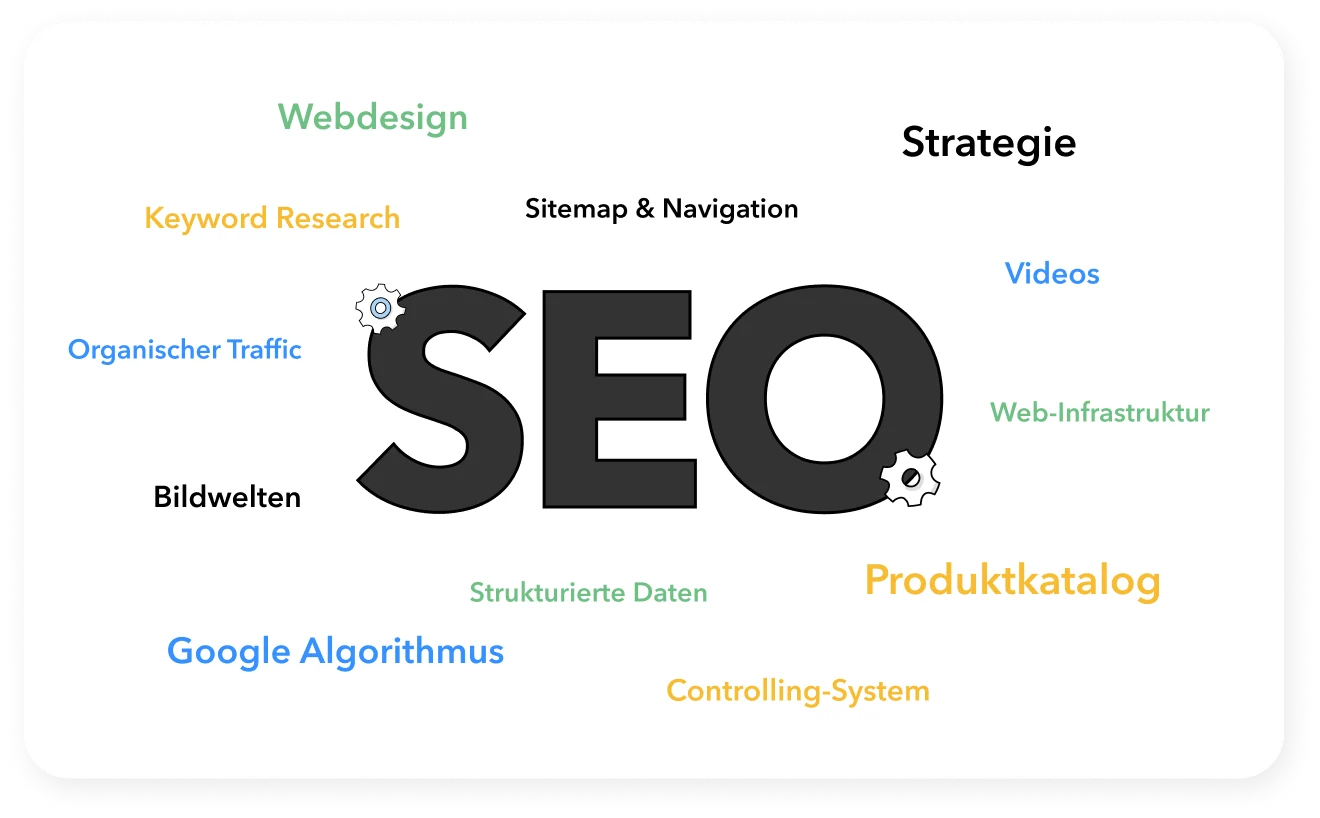
Online shopping has become the easiest way to shop for many consumers. However, running a successful e-commerce website is not a given. SEO is a major factor. Today, together with the Online Marketing Agency team at E-Commerce Marketing , we look at what matters in e-commerce SEO.

Word cloud for e-commerce SEO with terms such as strategy, keyword research and product catalog

E-Commerce SEO - what to do before you start

A large part of your search engine optimization strategy depends on the data you can collect. This data comes from your website, from search engines and from third-party sources. With that in mind, the first steps for any e-commerce SEO effort look as follows.

These are the questions you need to ask yourself

Is Google Analytics or another analytics system set up correctly?

Is the website registered in Google Search Console and Bing Webmaster Tools?

Have you chosen an SEO plugin? This depends on the technology/website platform you use.

Is there a sitemap and a robots.txt file, and have they been submitted to the search engines?

Once you have answered these questions, it continues with so-called off-page SEO. Our SEO Agency in Zurich has summarized the most important points.

Off-page factors for e-commerce SEO - what to look out for?

Off-page SEO is often associated with link building, but it goes far beyond that. Here are a few examples.

1. A social media presence

Social media serves as a free platform for distributing high-quality content. It lets you build an online presence and strengthens credibility, which leads to more shares and backlinks. The most important tip in this context is to create and promote high-quality content that interests your audience. Our Social Media Consulting can help you design and promote such content effectively

2. Directory listings

Another way to improve off-page SEO is to use online directories such as Google Business Profile (formerly Google My Business). An online directory contains important information about a business that the target audience is looking for.

3. Find websites that link to competitors

Before you build backlinks to your e-commerce website, you should first size up the competition! That is why it is important to know which websites link to your direct competitors. Ultimately, these are the websites you will be competing with in the search results.

4. Collecting backlinks

Backlinks play a crucial role in the success of e-commerce SEO. According to Google, backlinks are among the most important ranking signals. Backlinks are links from other websites to your website. They increase a website's domain authority, relevance and trust.

To finish, here is a visual overview of the most important off-page SEO measures. In the next section, you will learn why technical SEO matters too.
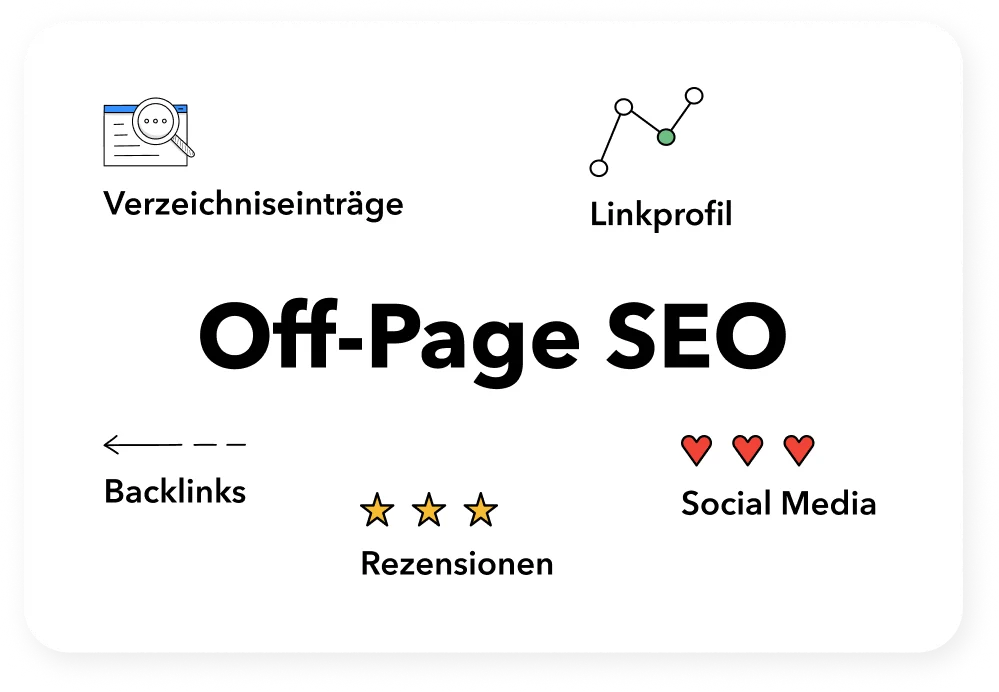
Elements of off-page SEO: directory listings, link profile, backlinks, reviews, social media

What is technical SEO and why is it important?

Technical SEO focuses on making sure a website offers a great experience for users and satisfies search engines. In other words, it is about the user experience. The following sources of errors in particular should be avoided.

Page not found - customer gone

Requesting a non-existent web page should always return a 404 status code or a 404 page! A 404 page has no direct influence on SEO efforts. But it can affect usability.

What about redirects?

301 redirects can be used on a website without limit. However, you shouldn't use them too often, to avoid so-called redirect chains!

Page experience and performance

Page experience signals are about factoring the actual user experience of a web page into search algorithms and rankings. In most cases, this comes down to optimizing your e-commerce website for front-end performance and working on your Core Web Vitals.

What should you check to improve a website's performance?

Is the e-commerce site mobile friendly?

Is the HTTPS encryption protocol used?

Are images and videos optimized?

Are web-safe and fast fonts used?

If you rely on an API in the back end, is it fast and scalable?

Website architecture

The organization and structure of an e-commerce website matter from the perspective of both users and crawlers. A flat structure helps visitors and search engine crawlers find their way around a website in just a few clicks from the home page. No page should be more than three clicks away from any other page! The most important pages should be linked from the home page!

The next stage of a successful e-commerce SEO strategy is keyword selection.

What should you look out for in keyword research?

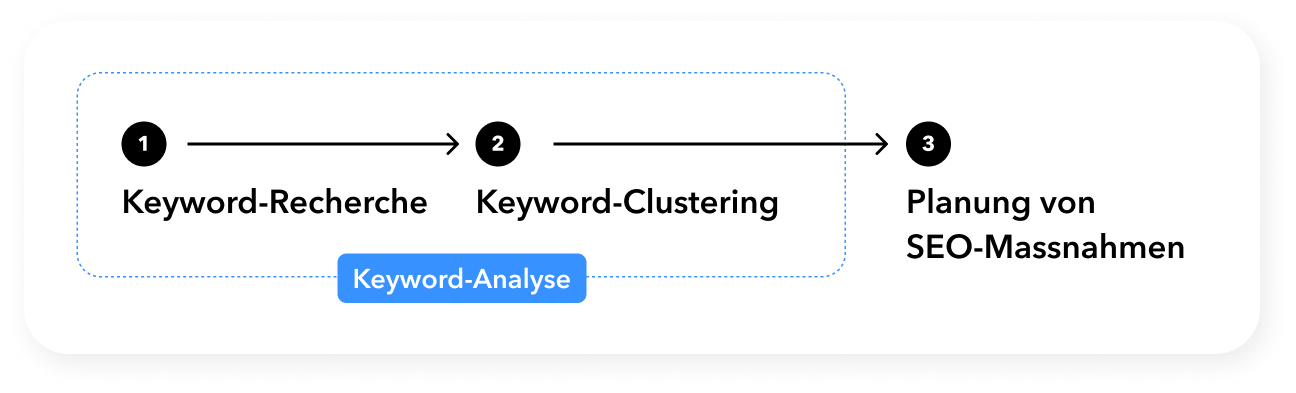
Finding the right keywords for a product or a business is a cornerstone of a successful E-Commerce Marketing as well as an SEO strategy. Keyword research should help you understand how a target audience searches for products or services, which keywords it uses and what it expects when it finally clicks a link. An efficient keyword analysis process is shown below.

Process: keyword research, keyword clustering, planning of SEO measures

Successful SEO measures rely on comprehensive research of all possible keywords. In the next step, these keywords are grouped into sets or "clusters." Finally, the insights gained this way are used to plan and implement targeted SEO measures.

Is the focus on search intent?

If you focus on the search intent of your target audience, you can create the right content for the keywords you are targeting. There are four different categories:

informational,

navigational,

transactional, and

commercial search.

The intent of a search query is of course always connected to the type of content. Nevertheless, when creating content you should focus on the users, not on a particular topic, keyword or format itself! The target keyword or keywords should always be tested against different intents! This lets you create different types of content for greater reach and more sales!

E-Commerce SEO - On-Page Optimization Basics

The good old SEO basics are still very valid for E-Commerce and can't be repeated often enough. Website structure, URL and navigation are part of them as well. For example, the title length should be between 50 and 60 characters. It is also important to use H2 and H3 tags for secondary keywords, or to use the main keyword within the first 100 words of the web page text.

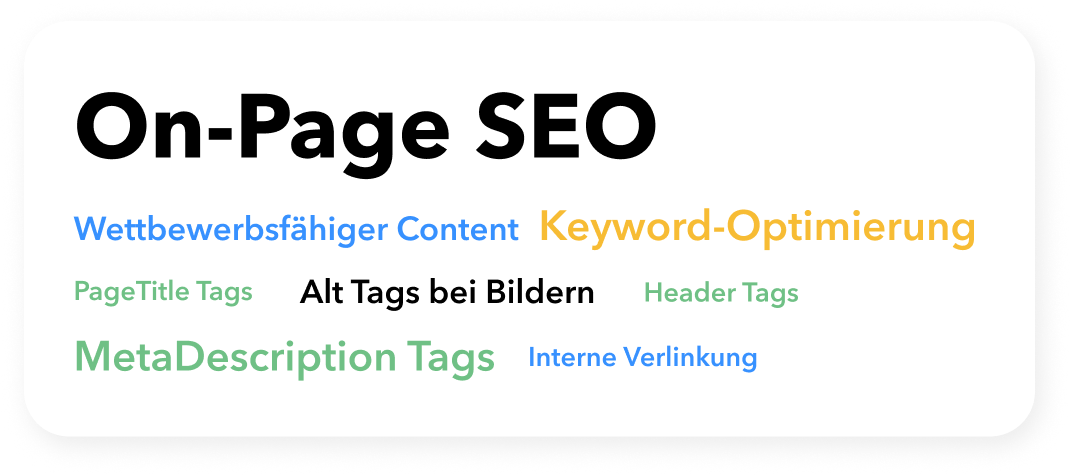
External links should also open in a new window to prevent users from leaving your website! Of course, this is only a small excerpt from the catalog of on-page measures you need to implement as part of search engine optimization. The following graphic shows what else matters.

Elements of on-page SEO: content, keyword optimization, page title, alt tags, meta description, internal linking

What about content?

E-commerce has moved far beyond simply listing products in categories and ticking product boxes on a product page. Today, e-commerce requires you to constantly produce engaging and compelling content!

Content and commerce are merging, and customers expect, among other things, rich, detailed information about your products. This means you need to be able to fill product information in the back end with pretty much anything - from descriptions, images and videos to technical data, variants and other important information! This makes it possible to quickly convey a message or a story on every channel and every medium!


Build an outstanding e-commerce business

Turn your website into an organic search powerhouse with our expert e-commerce SEO services! E-commerce SEO is a complex process that requires e-commerce websites to rank high in search engine results and to rank better for the keywords people use to find the products they are looking for. If you need help with your e-commerce SEO strategy, contact us! As a SEO Agency and Google Ads Agency we are happy to help you. 

Start an SEO Project

Exciting topics in e-commerce

E-Commerce SEO with Fire8

Increase your visitor numbers and revenue with e-commerce SEO!

*
*
*
*
What is it about?
Samuel, Digital Marketer at Fire8, with tablet

Samuel

Digital Marketer

Samuel

Digital Marketer