Data-Driven E-Mail Marketing
Do you want to increase your revenue without spending a fortune on marketing channels you can hardly control? Try a data-based approach to email marketing!
A solid email marketing strategy takes both promotional and transactional emails into account to create an optimized customer experience throughout the entire Customer journey .
In this article, we look at some of the different types of marketing emails you can send and also introduce you to some benefits of a data-based approach to email marketing.
The 3 most important types of email marketing campaigns
Every email marketing strategy is different, but they all have something in common - they are based on one of the following three types of email.
- Promotional emails
- Transactional emails
- Lifecycle emails
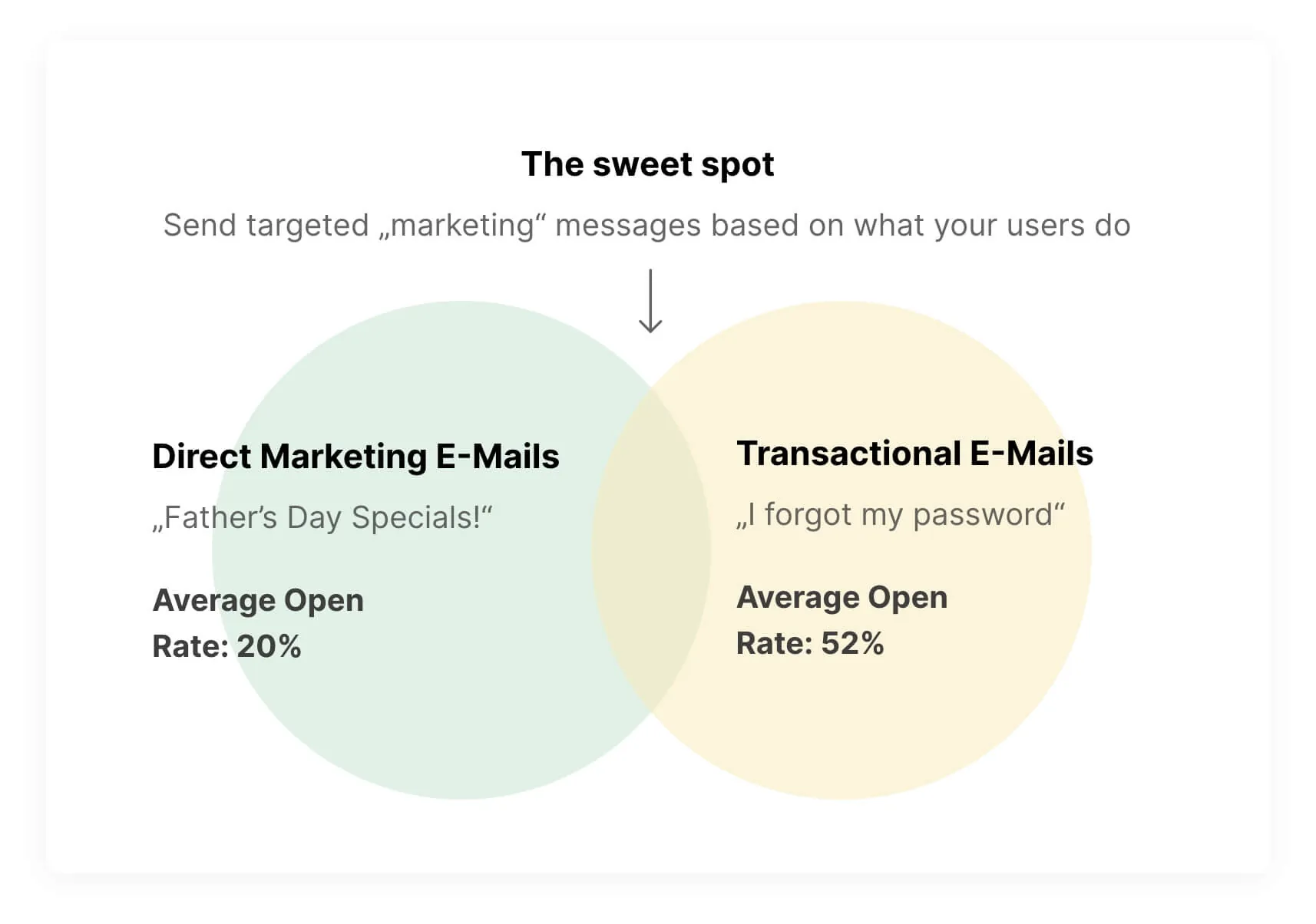
Of course, you don't have to use all of them in your marketing strategy. However, as you keep growing your online business, you should make sure your communication is versatile and tailored to users at the different stages of your funnel so that you hit the infamous sweet spot!
Promotional emails
With promotional emails, you inform your customers about offers in your shop, new product lines, new collections, and the like.
These include:
- emails announcing new products,
- regular newsletters,
- emails with promo codes intended only for subscribers,
- seasonal offers,
- special promotions for a specific audience segment, for example most loyal customers, high revenue, et cetera,
- top-of-mind messages, for example with the latest blog posts and tips from your team.
Transactional emails
These are functional emails sent to customers with important information about a specific transaction in your business:
- subscription confirmation emails,
- order confirmation emails,
- emails with shipping information,
- emails with customer satisfaction surveys.
Lifecycle emails
Lifecycle emails are automated emails triggered by a buyer's action and depend on where they are in their customer lifecycle:
- welcome email series,
- win-back email series,
- reminder emails for an abandoned shopping cart,
- upselling and cross-selling emails.
Context is crucial
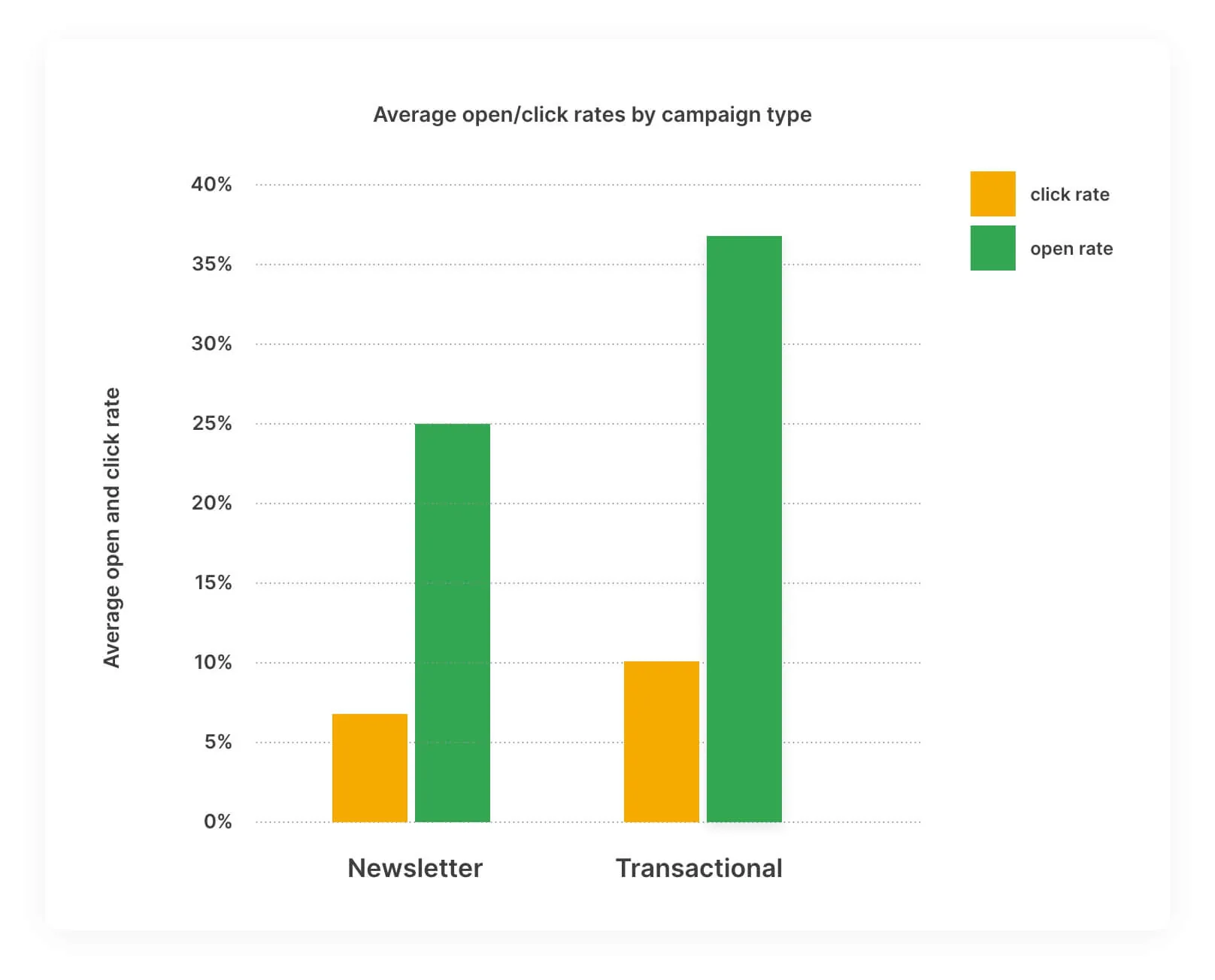
Statistical analyses of several million email marketing campaigns have shown that transactional emails have a click rate 42 percent higher than their newsletter counterparts. For every 100 clicks on a newsletter, there are 142 on a transactional email.
And why? Context. Context is everything in email marketing.
Your customers should intuitively understand why they are receiving your emails.
Yes, they subscribed to the newsletter, but what behavior triggered the message? Did it arrive at the right time in their buying process? And what exactly should they do next?
A data-based approach to your email marketing can answer these and other questions and help your campaign become even more successful.
How a data-based approach helps your email marketing
One of the biggest advantages of the digital world is that you can measure pretty much anything you want. Although the value of data is easy to see in any marketing campaign, there is more behind the phrase "data is king".
If it were that easy to use data to steer email marketing campaigns, we would not all receive a flood of irrelevant emails with alarming regularity from companies we once dealt with.
Unfortunately, even professional marketers sometimes forget how data can help them. Not so Fire8!
Why is the help of professionals essential for successful email marketing?
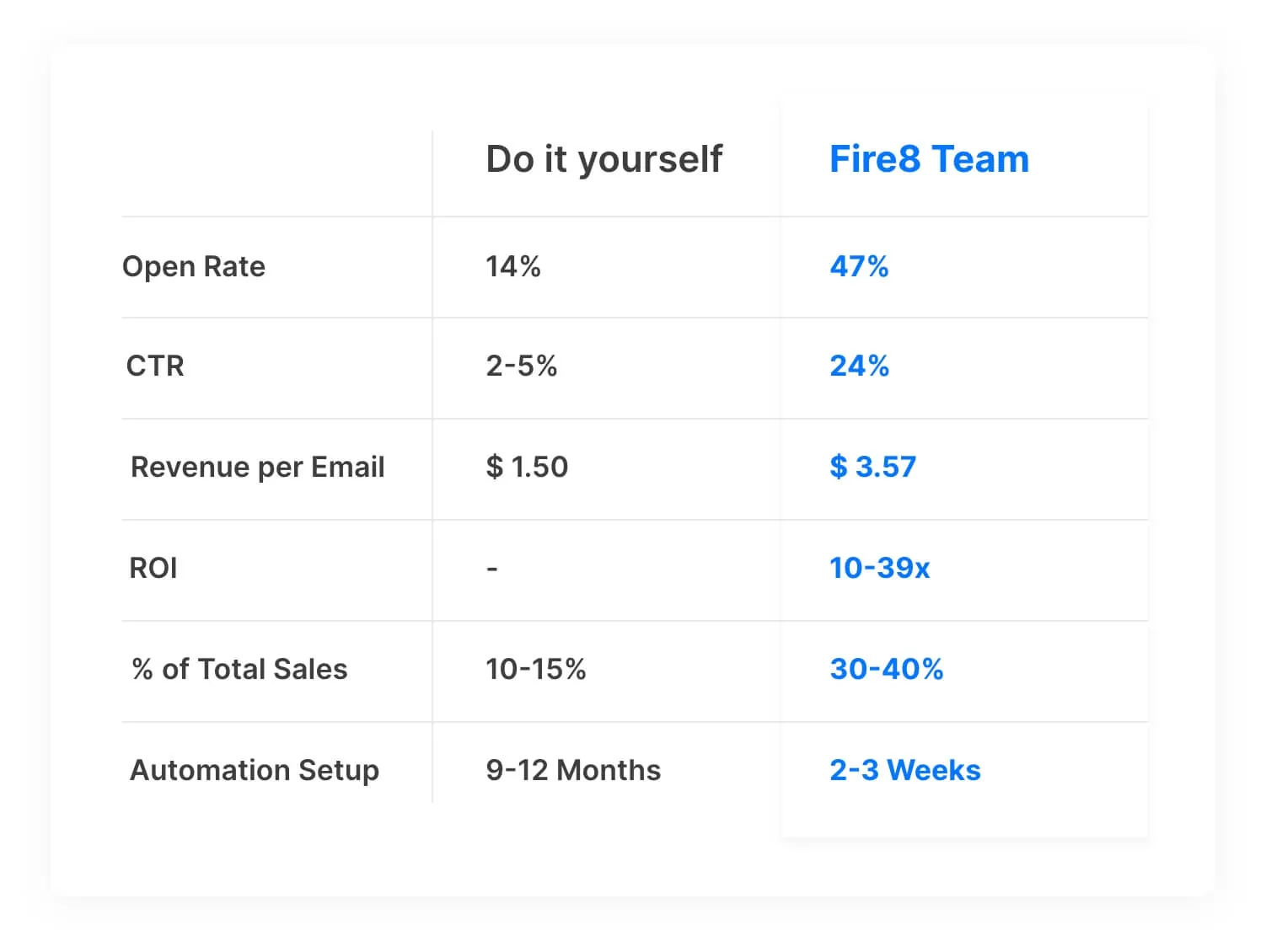
Fire8 has sent millions of emails that have increased our clients' ROI many times over. There is no secret to how we do it.
We have refined our skills over years to know exactly how to help every brand in its specific situation.
And although every brand is different, we have worked with enough companies to know how to achieve the best results through email marketing.
Which customer data is particularly important for email marketing?
Here are the four most important types of data that everyone who does email marketing should be familiar with.
- Email engagement
Basic email engagement data shows where the customer clicked within the email. This includes open rates, opened links, clicks, and related metrics.
- Web engagement
Access to a recipient's web engagement data can help you gain a better understanding of how the customer browses a website. Abandoned shopping carts and completed applications, for example, show what the customer is looking for. They also reveal which kinds of email campaigns prove particularly appealing.
- Profile preferences
Data from user profiles, such as location, age, and gender, is not as reliable as users' most recent email or web interactions. Nevertheless, it is valuable for the basic direction of the campaign. Also consider data that comes from third-party providers! This data can give you insights into the behavior of consumers who do not engage with your brand, or provide information that has not been disclosed and can be used for insights.
- Purchase data
Data on past purchases can be a valuable indicator of a consumer's next steps. By looking at what the subscriber has bought in the past and what they are using now, email campaigns can be adapted to suggest a personalized next step. For example, if the customer has just bought a new mobile phone, knowing about special offers for phone cases and screen protectors can help guide the next purchase.
Start aligning your email marketing with data now!
Your email marketing strategy is the key to staying in touch with your customers and making sure they have a good experience with your business.
If that is the case, they are much more likely to come back and become loyal customers who buy again and again.