The Optimal Customer Experience

Customer Journey Mapping in the Digital Age

Illustration: Programmatic Advertising with Data, Devices, and Audiences

The Customer Journey Is Becoming More Complex

By multiplying the available touchpoints between brands and customers, digital technology has made the customer journey significantly more complicated. The recent pandemic has intensified this trend even further. Within a few weeks, "brick-and-mortar" buyers became digital buyers. In this article, Fire8, your B2B Marketing Agency , explains why analyzing the digital customer journey is fundamental to business success and how you can optimize your customer journey mapping .

Hardly Any Purchase Process Is Linear

For many years, the understanding of the consumer purchase process relied heavily on the traditional, linear customer funnel, which is outdated today. We now know that the path to purchase is not as linear as the funnel model suggests. Buyers and prospects have more ways to interact with companies than ever before. The focus has shifted from working through the funnel to delivering an exceptional customer experience.

The influence of digitalization on customer journey mapping

In recent years, the digital boom has influenced customer journey mapping by adding new stages - such as websites and blogs - alongside traditional physical stores, TV and radio advertising, and catalogs. Closely followed by social media, voice assistants, chatbots, and even display advertising, the emergence of these new marketing channels has made digital customer journey mapping even more complex.

Why Should You Analyze Your Digital Customer Journey?

Digital customer journey mapping has several benefits:

  1. Identify the friction points customers encounter that cause them to change, postpone, or abandon their plans.
  2. Gain a better understanding of customer needs and habits so you can offer the most suitable content at the best time.
  3. Gain insights to focus your marketing efforts on the most profitable or potentially best opportunities.

You Will Walk in Your Customers' Virtual Shoes

Providers of goods and services sometimes find it hard to put themselves in their customers' position or understand their perspective. You may try to guess what your customer feels instead of experiencing the journey yourself. By collecting feedback at the touchpoints along the customer journey, customers can express how they feel.

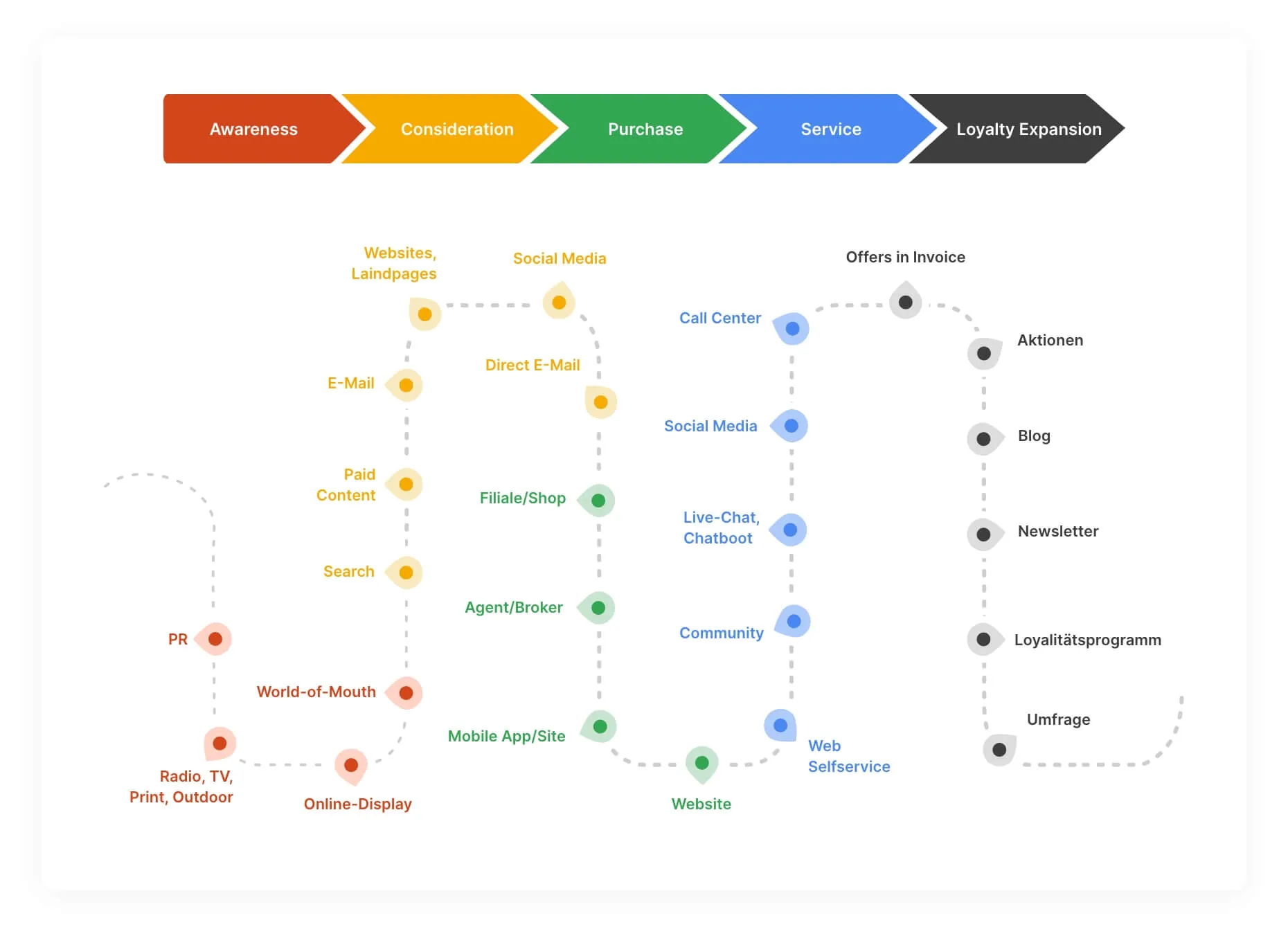
Because there are so many different ways customers can experience your brand, the idea of capturing all potential touchpoints may seem daunting at first. However, you can make this task easier by putting yourself in your customers' shoes and walking through their journey step by step. 

Customer journey map with the phases from Awareness to Loyalty and their touchpoints
That should make all touchpoints fairly easy to identify.

The Entire Company Will Work Together

All too often, companies work in silos: not just communication silos, where different teams don't talk to each other, but also system and data silos, where customer information is stored that is specific only to that part of the journey. It is the lack of a 360-degree view of the customer and of a seamless exchange of insights that leads to this fragmented experience.

With a customer journey map and centralized customer information, everyone in every department knows where they belong and what role they play in delivering a seamless experience.

You Can Target Your Content Marketing and Content Creation

Customers buy more when your content is relevant and tailored to them. Your customer journey map helps you build a complete 360-degree picture of your customers. This includes factors such as demographics, behavior, and psychographics, so you can target new and returning buyers.

You Will Be Able to Predict Customer Behavior

Customer journey mapping not only gives you valuable insights into your customers' wishes, needs, feelings, actions, and aspirations. You can also use the data to predict and influence how customers will behave.

You Can Uncover Mistakes

If you map each phase of the customer journey and then your existing processes, you can do more than uncover gaps. You can also find out which are the most valuable touchpoints of the journey. Without customer journey mapping, you might focus on optimizing touchpoints that are not as influential and overlook a more important one.

What Data Can You Collect Through Digital Customer Journey Mapping?

Here are just some of the types of data you can capture along your digital customer journey. If you feed all of this data into a single platform for analysis, you can see how it relates and where it has an impact.
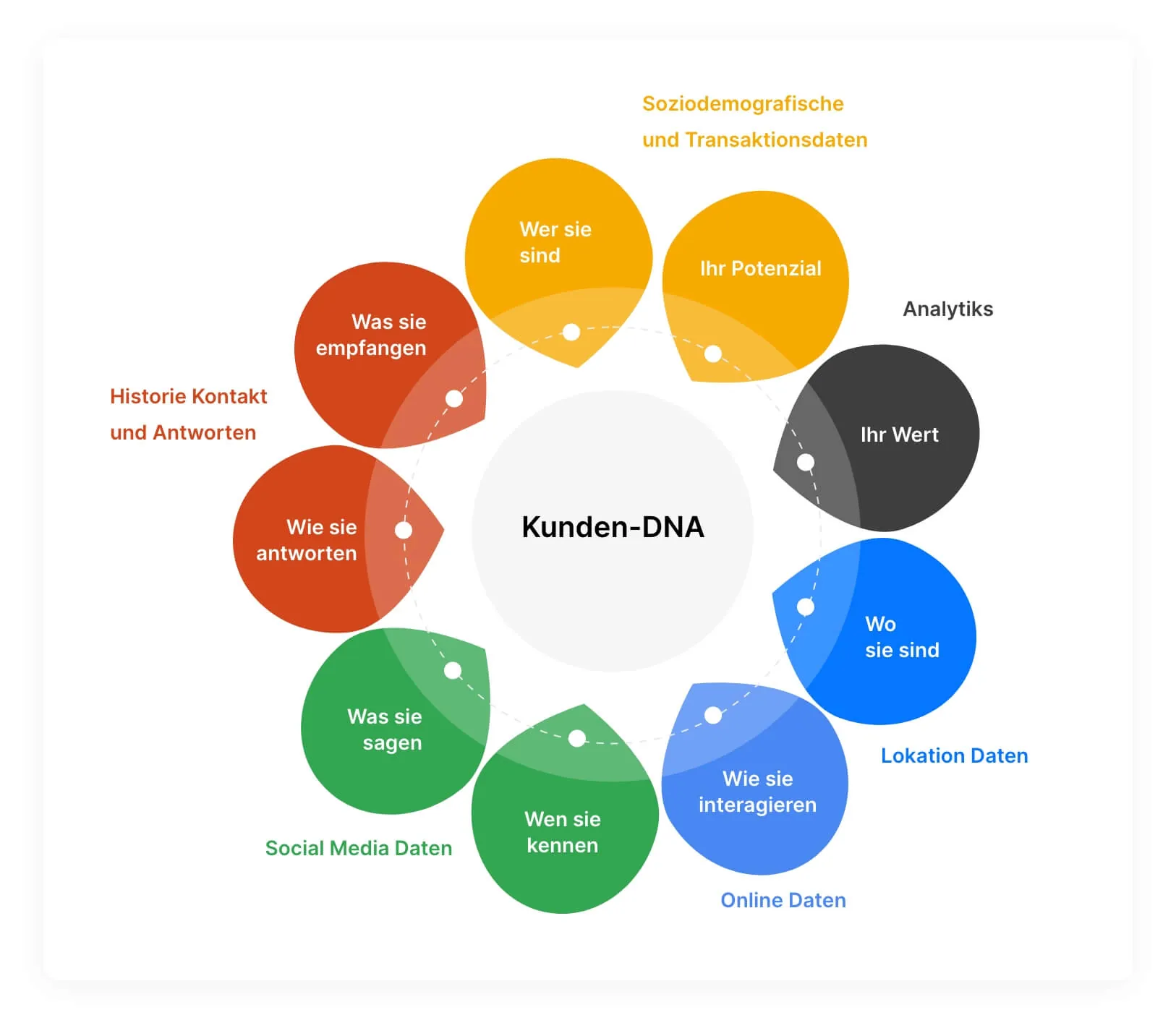
Diagram of customer DNA: questions and data sources around the customer profile
There is an abundance of customer data, but the right customer data matters more than a large volume of data. Many types of specific data are needed for a complete picture of the customer. The illustration above shows some common and frequently used examples of customer data, which we explore in a bit more detail below.

1. Web Browsing Data

Every time someone clicks through to your website, you can track their activity on the site and see how they interact with your brand. You can also see which devices are used to access your website.

2. Mobile App Data

When a customer uses your mobile app, they already have a certain level of loyalty. Mobile apps provide more customer information through profiles, logins, and locations.

3. Sales Data

You can track a customer's purchase history and shopping habits over a longer period. Do they buy right away, leave items in their cart, or regularly abandon purchases? Don't forget the sales that didn't happen! Finding out why not is important for understanding what needs to be improved!

4. Advertising Data

Who clicked through from an ad to your website? This data gives you information about customers who are just starting their journey to you. You can link advertising data with sales data to test the effectiveness of your advertising campaigns.

5. Loyalty Data

Your best customers are usually those who take part in your loyalty program. If you analyze who these customers are and how they use your brand, you can target exactly such customers.

6. Survey Data

Want to know what your customers think of your brand? Ask them. By sending surveys at the touchpoints along the customer journey, you get high-quality information about what works and what doesn't.

7. Social Media

More and more customers interact with brands via social media. If you understand the nature of this interaction, you can develop both your social media and your overall marketing strategies.

8. Aftersales Data

Information from your customer service department can reveal a variety of issues: product quality, delivery reliability, areas where product support is needed. How customers are treated after the purchase is decisive for whether they become - and remain - loyal or not.

Collecting customer data is the foundation and the first step of marketing analytics.

How Does Fire8 Optimize Your Digital Customer Journey Mapping?

Our B2B Marketing Agency focuses on an omnichannel approach. In today's world, the customer journey has to meet the demands of multiple channels! To achieve this, we need to take an omnichannel approach that gives all phases of the customer journey equal importance.

The goal? To create a seamless user experience that is consistent across all channels - whether phone, social media, or your website. The time of working in isolation is over!

All Departments Get on Board

Redesigning and optimizing your digital customer journey is no small task. It can even lead to major changes in your company. That is why involving all employees in the process is essential to ensure consistency and output when optimizing your customer journey.

Feedback from all departments is invaluable and helps develop a concrete path based on reliable data.

personalization

In today's highly saturated market, personalization can help you stand out from the crowd. However, effectively personalizing your digital customer journey requires excellent knowledge of your business goals and a clear understanding of your target personas.
This way, you can tailor the content on your website or app by age, location, areas of interest, previous searches, or purchases.

What About Digital Customer Journey Mapping for B2B?

Whether you operate in B2C or B2B, the basic principles of customer journey mapping are the same. Even though you deal with companies, you are still selling to people within those companies. There are just more of them, and your feedback processes need to be a little different. When we design customer journey maps for our B2B clients, we need to consider the following points.

1. A B2B Journey Involves More People Than a B2C Journey

As a result, more customer personas need to be created. You are dealing with CIOs, executives, managers, technical staff, and other employees. All of these people are your customers, segmented by persona.

2. B2B Customers Are More Valuable

Building business relationships can require years of investment. Customer personas need to be prioritized and segmented by business value! The CIO, for example, has more purchasing power than a department head.

3. B2B Customer Feedback Is Different

Because much of B2B business relies on personal interaction and referrals, business people often know each other. It is more acceptable to pick up the phone and discuss a problem than to send a generic survey. Your feedback techniques need to be tailored much more individually to each of your B2B customers so they feel understood and yet special!

Example of a B2B Customer Journey Map - An App for Booking Appointments in a Digital Calendar

In the following example, we present the digital customer journey map for each phase of the customer journey for a B2B calendar app used to schedule appointments.
Pre-Awareness Phase

In the pre-awareness phase, an employee of a potential customer company sees a social media post. The post is about the challenges that arise in their work when information is available in different places, such as the email inbox, chat logs, and the calendar.

This post makes the employee aware of how much time and effort goes into administrative tasks. The employee realizes that there is a problem in internal appointment scheduling that is worth finding a solution for.

Awareness Phase

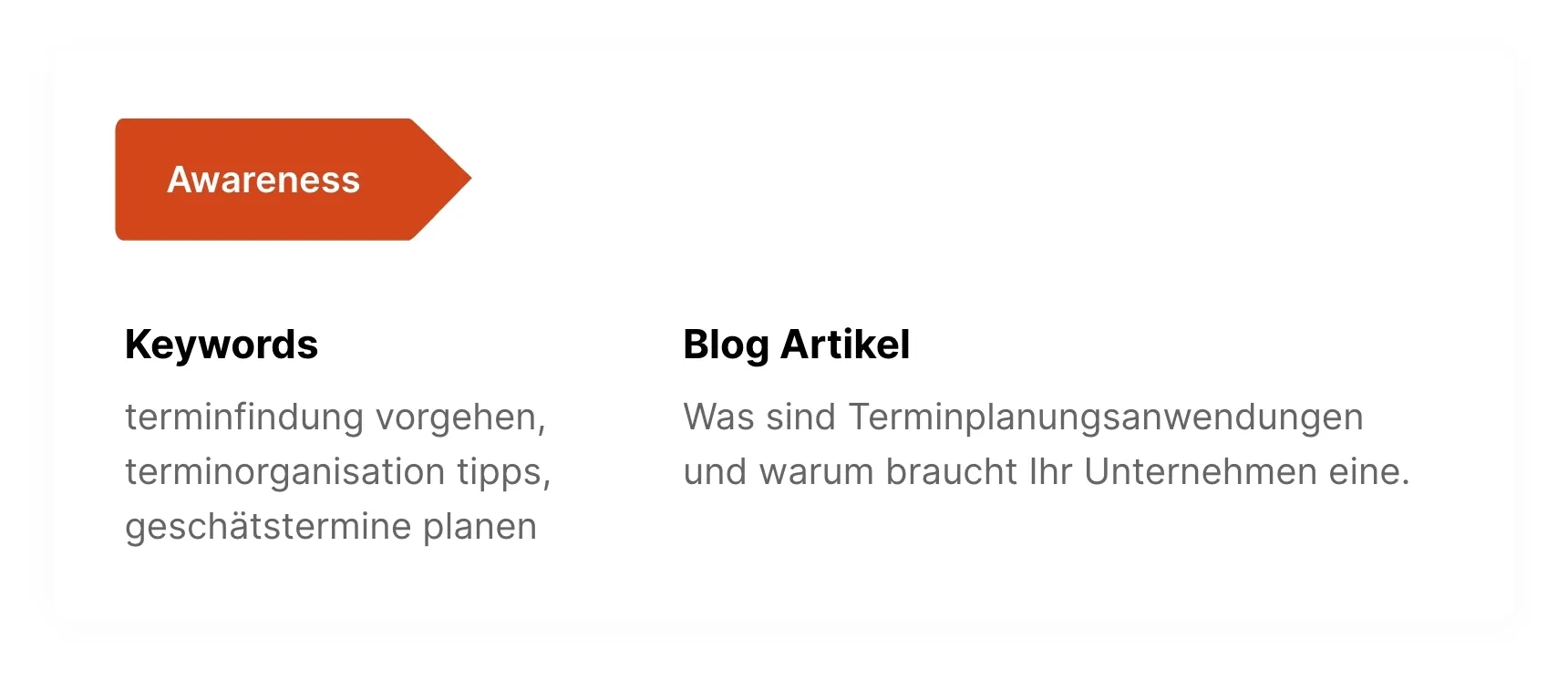
The employee starts gathering information and searches online for "the best way to schedule business appointments". The search leads to a blog post titled "What are scheduling applications and why does your business need one?". Among other things, this post also presents various online appointment booking tools.

Example for the Awareness phase: matching keywords and blog articles

The Consideration Phase

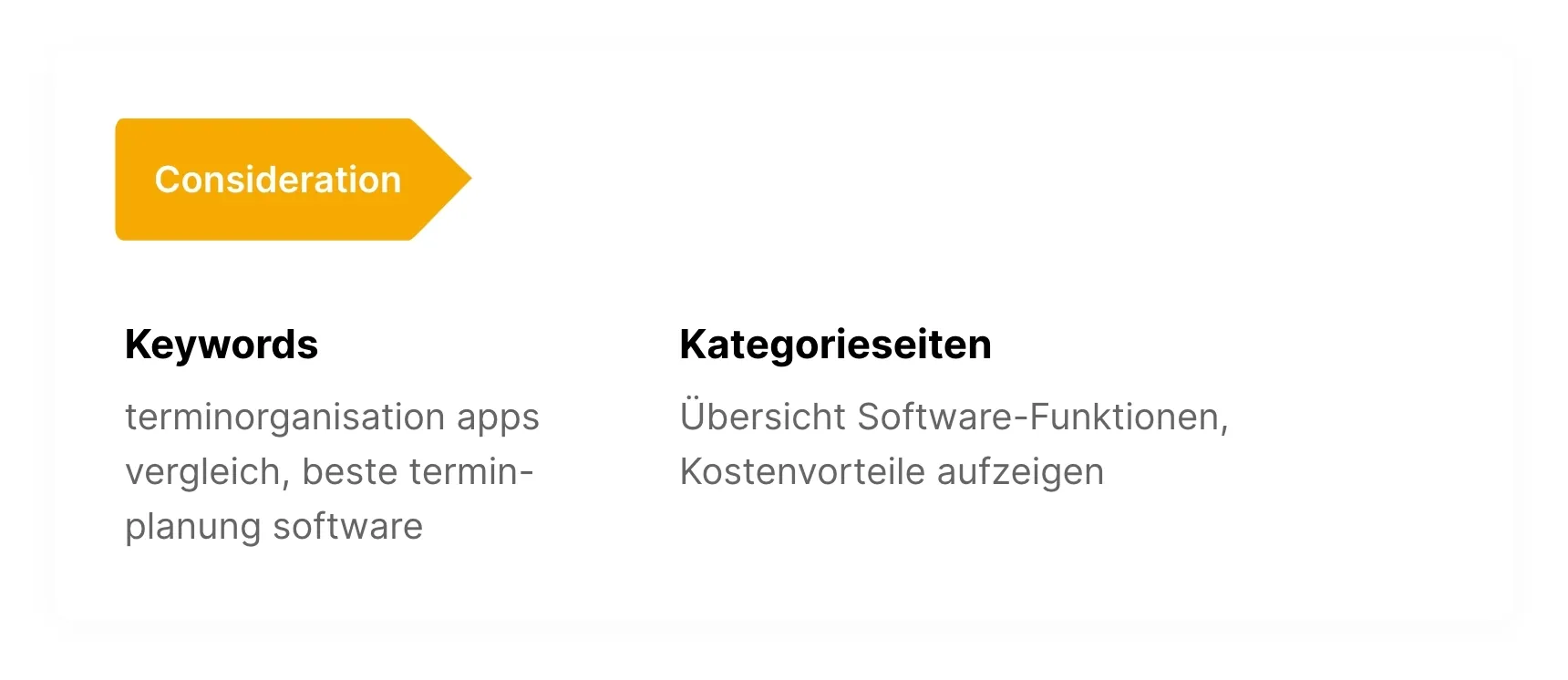
In the next step of the research, the employee looks for further reading using the keyphrase "best appointment scheduling software" and similar. They find an article that compares different scheduling applications. 

At this point of the buyer's journey, important differences between B2C and B2B become clear. The employee has found a few solutions that are candidates for them. However, a decision for or against a particular program in B2B often requires the feedback of several people.

The different roles and functions lead to a variety of opinions about the best solution. What's more, there could be internal disagreement about whether the identified problem is even a problem at all!

Weighing different options can trigger discussions about budget or project prioritization, which extend the consideration phase.

Example for the Consideration phase: keywords and category pages

The Conversion Phase

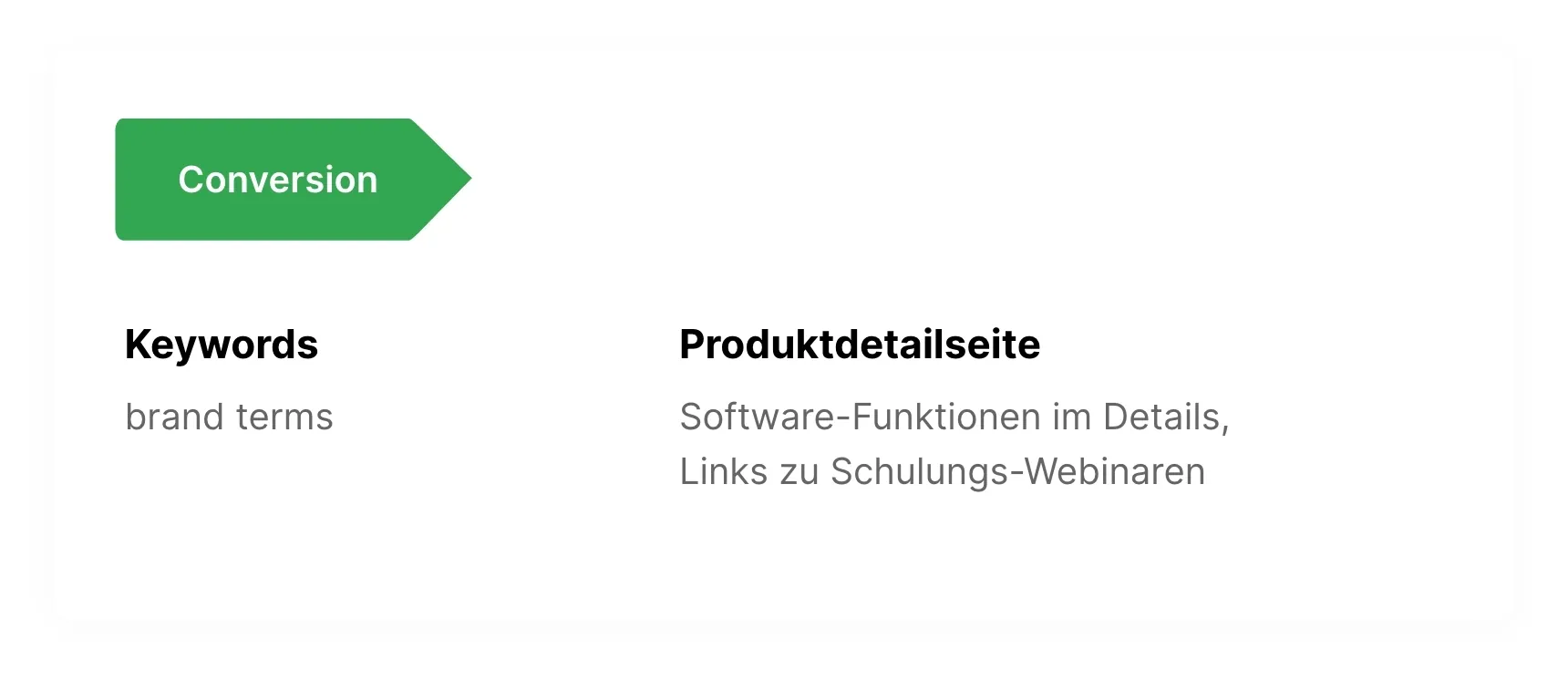
In this phase, a decision is made and everyone agrees on a specific application after concrete scheduling application providers have been compared. This decision comes with certain expectations that all stakeholders have about using the application. 

Example for the Conversion phase: brand keywords and product detail page

The Post-Conversion Phase

After the purchase, the likelihood of a repeat purchase depends on various factors such as the customer experience, customer service, and ROI. The application provider must exceed average customer expectations, respond to customer feedback, and delight customers with a customer journey that offers more than they had imagined!

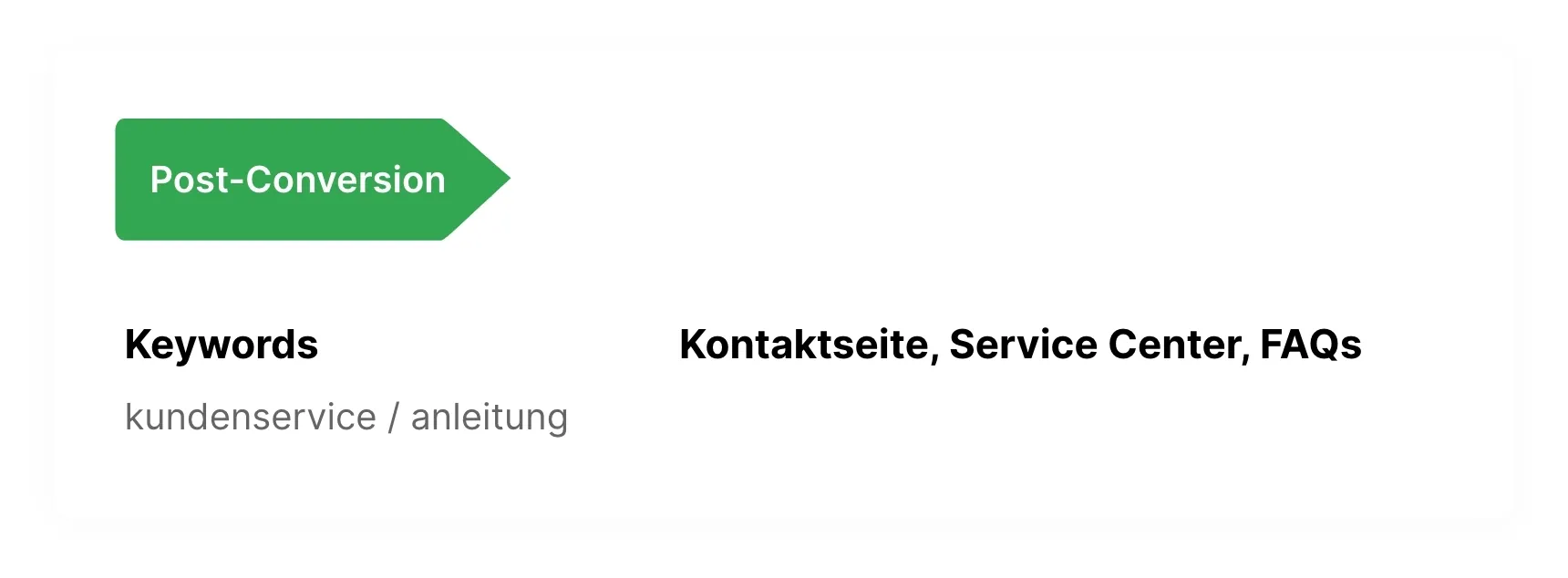
Example for the Post-Conversion phase: contact page, service center, and FAQs

Fire8 Project Inquiry

Customer Journey Mapping with Fire8

Fire8 enables companies to create a customer experience that is intuitive, personalized, and relevant and that drives engagement across the entire customer journey. As Google Ads Agency and Online Marketing Agency Zurich we help you increase revenue by delivering better experiences and personalizing the customer journey with targeted messages and offers based on purchase history.

Would you like to learn how we can implement this for your company? Click "Get personal advice" below and let's talk about how our team in the B2B Marketing can move your business forward.


Get personal advice

Our Industry Solutions

Customer Journey Project Inquiry

Talk to one of our experts in digital customer journey mapping.

*
*
*
*
What is it about?
Christian, Head of Marketing Services at Fire8, with a tablet

Christian

Head of Marketing Services

Christian

Head of Marketing Services